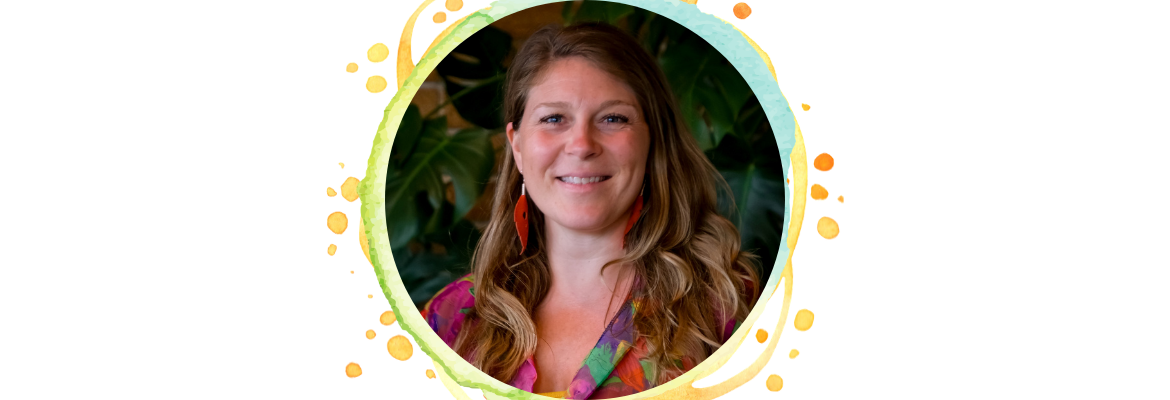
I offer therapy beyond words—through the body, creative expression, nervous system awareness, and felt intuition. While talk therapy can be an important part of the healing journey, some experiences may be more easily accessed and understood through sensation, image, metaphor, sound, and movement.
As a Registered Art Therapist and Therapeutic Counsellor, I take a flexible, multi-modal approach, drawing from art therapy and expressive arts, talk therapy, somatic practices, parts work, movement, and sound. There is no expectation to work in any particular way – we follow what feels supportive and meaningful to you.
Our work together focuses on creating a safe, compassionate space to explore what arises without needing to force, fix, or “figure it all out.” Moving at your own pace, we practice ways of being with emotions, patterns, and unresolved parts of ourselves with curiosity and care. This work can support deeper self-trust, emotional insight, nervous system regulation, and a return to a more vibrant, authentic self.
ABOUT ME:
With over 15 years in therapeutic roles and over 20 years working with children and families, I bring a playful, curious, and compassionate energy to all that I do. This background has given me a rich foundation in attachment theory, nervous system regulation, emotional development, and the importance of safe, trusting relationships. I graduated from the Vancouver Art Therapy Institute in 2012 and am I a Registered Art Therapist with the Canadian Art Therapy Association, as well as a Registered Therapeutic Counsellor with ACCT.
At the heart of my work is a deep respect for sensitivity, the wisdom of the body, and the soul’s natural movement toward wholeness. I support people in finding more ease in authentic expression, allowing playfulness, lightheartedness, and creativity to become part of the healing process.
I offer online sessions across Canada, as well as expressive arts workshops, emotional alchemy groups, meditation circles, moon ceremonies, and sensory-based experiences that deepen connection with self, others, the body, and the creative spirit. These workshops are often hosted in Burnaby, BC (as well as online).
Outside of my practice, I am an avid dancer, nature lover, and serious foodie who finds great pleasure in the simplicity of everyday life.
There is no single formula for a session, but we will usually begin by checking in with how you are arriving that day — what you are noticing emotionally, what may be present in your body, and what has been happening in your life. We might also explore a simple mindful awareness practice to ground into the space together.
From there, we follow what feels most alive and meaningful. We might spend time talking, slowing down and noticing a sensation or emotion in the body, get curious about a particular pattern or part of yourself, or bring your inner experience outside through drawing, movement, body posturing, or another form of creative expression.
Some sessions may involve a lot of talking, some may be more creative or body based, and often we move naturally between the two (following your internal impulses).
Near the end of the session, we usually take time to reflect and notice what has shifted and / or emerged, what you are taking with you, and what might support you as you move back into your day.
If you are open to it, I offer homework each session that you can explore between sessions (including journaling prompts, somatic awareness practices, drawing exercises, etc).
Through all of this, there is never any expectation to perform, explain yourself perfectly, or explore in any particular way. You can arrive exactly as you are, and together we will listen for what wants attention.
I offer a free 20-minute consultation before booking your first session. This is an opportunity for us to meet, talk a little about what is bringing you to therapy, and get a sense of whether working together feels like a good fit.
The therapeutic relationship matters. You don't need to arrive knowing exactly what you want to work on or how to explain it. The consultation is simply a space to ask questions, learn a little about how I work, and notice how it feels to connect.
Somatic therapy recognizes that our experiences are carried not only in our memories and thoughts, but also in our bodies - in how we hold ourselves, where tension lives, how we breathe, and in the rhythms of our nervous system.
In our work together, we slow down and bring gentle awareness to sensations, emotions, body patterns, and the different parts of ourselves that show up in relation to our life experiences. This exploration can be slow and expansive as we get curious about different aspects of the same experience (almost like opening different doorways onto the same path).
Rather than trying to fix, analyze, or push through what arises, we practice meeting your experience with curiosity, care, and openness. We notice patterns and protective strategies that have developed for good reason, and gently explore what they might need now.
In practice, this might look like noticing where an emotion lives in your body and spending some time with the sensations there. We might try on different postures and notice how each one changes your experience; explore whether a sensation carries an image, colour, movement, word, or metaphor; or gently dialogue with a felt sense or image to discover what it might be wanting you to know. We might also notice an impulse in the body — perhaps to move closer, pull away, curl inward, push, make a sound, or take up more space — and safely explore that movement together.
The intention isn't to make anything happen, but to create enough space and compassionate attention for your body's own wisdom and inner knowing to emerge.
Not at all. You don't need to be an artist, you just need to be you.
Expressive arts therapy isn't about making something beautiful or creating "good art." The focus is on the experience of creating and what we discover through the process.
Drawing, painting, movement, voice, metaphor, image, and play can give us ways to express and understand things that words alone may not reach. Sometimes we even intentionally loosen control — drawing with your non-dominant hand or with your eyes closed, for example — so there is less pressure to make something that looks a certain way.
There is never any pressure to make art in session.
Online expressive arts therapy allows you to explore creatively from the comfort and privacy of your own space. We can move between conversation, body awareness, art-making, movement, sound, or other forms of expression much as we would in person.
As an image, colour, shape, or texture emerges in our exploration, we might give it form through drawing, painting, modelling clay, or another medium. It's not about how the art looks, but what you notice as you create it and what emerges as we engage with it afterward.
Once something has been created, we approach it with curiosity rather than analyzing or interpreting it. We might notice what happens in your body as you look at it - what draws your attention? What feels surprising, uncomfortable, familiar, or alive? We then dialogue with the image to see what it might have to share, or continue the creative process by adding to it, covering or removing something, adding words, or transforming it in some way. Sometimes even a small change can shift how you experience the artwork — and yourself in relationship to it.
Online, you can keep your camera pointed toward you while you create so I can stay connected to your process, including changes in your posture, breath, or expression. When you're ready, you can simply hold your artwork up to the camera or tilt your screen so we can explore it together.
There is no "right" way to create or understand what emerges. Meaning comes through your own experience, sensations, associations, and relationship with the work.
If you would like to try exploring with art therapy, you don't need an elaborate collection of art supplies. A few sheets of paper and something to draw or write with can go a long way. Choice of colour is great! If you enjoy having more options, you might keep markers, pencil crayons, pastels, paints, clay, or other materials that you naturally feel drawn to nearby.
Coverage depends on your individual extended health plan. I am a Registered Therapeutic Counsellor (RTC) with the Association of Cooperative Counselling Therapists of Canada (ACCT) and a Registered Canadian Art Therapist (RCAT) with the Canadian Art Therapy Association (CATA).
Some extended health plans cover counselling provided by an RTC while others do not. I recommend checking directly with your insurance provider to confirm whether your specific plan includes coverage for my credentials.